If you’re having trouble reading this, click here.
INPUT
October 14, 2026
1. Top Headlines
Inflation: Over the past 12 months ending in September, the Consumer Price Index for All Urban Consumers increased 3.7% before seasonal adjustment (Bureau of Labor Statistics).
Iran: Two cargo ships were sunk near the Strait of Hormuz as Iran steps up attacks (The Wall Street Journal, subscription).
Housing: More buyers are choosing riskier mortgages amid high interest rates (CNBC).
2. Manufacturing Associations Push for Permitting Reform
Members of the National Association of Manufacturers’ Council of Manufacturing Associations, a network of more than 200 national manufacturing trade associations, have joined the NAM’s all-out push for action on permitting reform.
Together with the NAM, they are urging Congress to advance the Bipartisan American Affordability and Jobs Act to deliver long-overdue reforms to our nation’s permitting process that costs manufacturers at least $8 billion annually.
Broad support: From energy to infrastructure to transportation and beyond, manufacturing associations are making the case for action. Here’s a sampling of what industry leaders are saying:
Association of American Railroads: “Too often, freight rail infrastructure projects are delayed or paused for years because of burdensome environmental reviews, slowing critical efforts to improve the safety, efficiency and reliability of America’s national rail network,” said Association of American Railroads President and CEO Ian Jefferies. “The commonsense provisions included in the Bipartisan American Affordability and Jobs Act represent an important step forward toward comprehensive permitting reform.”
American Gas Association: “The momentum is here. The coalition is here. The need is undeniable. The time to pass durable permitting reform is now.”
American Cement Association: “Nothing gets built in America without cement, and too little gets built on time because the federal permitting system takes too long and invites endless litigation. The Bipartisan American Affordability and Jobs Act addresses both problems. It sets firm deadlines for environmental reviews, modernizes permitting procedures for the National Environmental Policy Act and Clean Water Act, places reasonable limits on legal challenges and ensures that a permit, once issued, can be relied upon.”
American Chemistry Council: “The legislation would modernize federal environmental review and permitting processes for infrastructure projects, provide greater certainty for federal permits and authorizations, and help enable the all-of-the-above energy resources needed to meet America’s growing energy and manufacturing demands.”
American Clean Power Association: “The American Clean Power Association greatly appreciates the leadership of Sens. Capito, Whitehouse, Lee and Heinrich in developing strong, technology-neutral permitting reform legislation that includes an administration commitment to approve wind projects. All energy industries must be able to confidently rely on the durability of federal permitting decisions. The transmission provisions will also enhance grid reliability and enable economic growth.”
Read the whole thing: Check out the full list of association statements here.
The bottom line: As NAM President and CEO Jay Timmons said when the Senate introduced the bill, “This is an opportunity Congress should seize. We urge Senate Majority Leader John Thune (R-SD) and Senate Minority Leader Chuck Schumer (D-NY) to act and for all senators to advance critical permitting reforms—and once the Senate acts, for the House to move expeditiously to get this legislation across the finish line.”
Learn more: Check out the NAM’s advocacy work on permitting reform here.
3. MI Takes Roadshow to Smurfit Westrock, Highlights Success of FAME
The event brought together manufacturing executives, educators and regional leaders to address the growing skills gap in manufacturing and showcase scalable, employer-led workforce solutions.
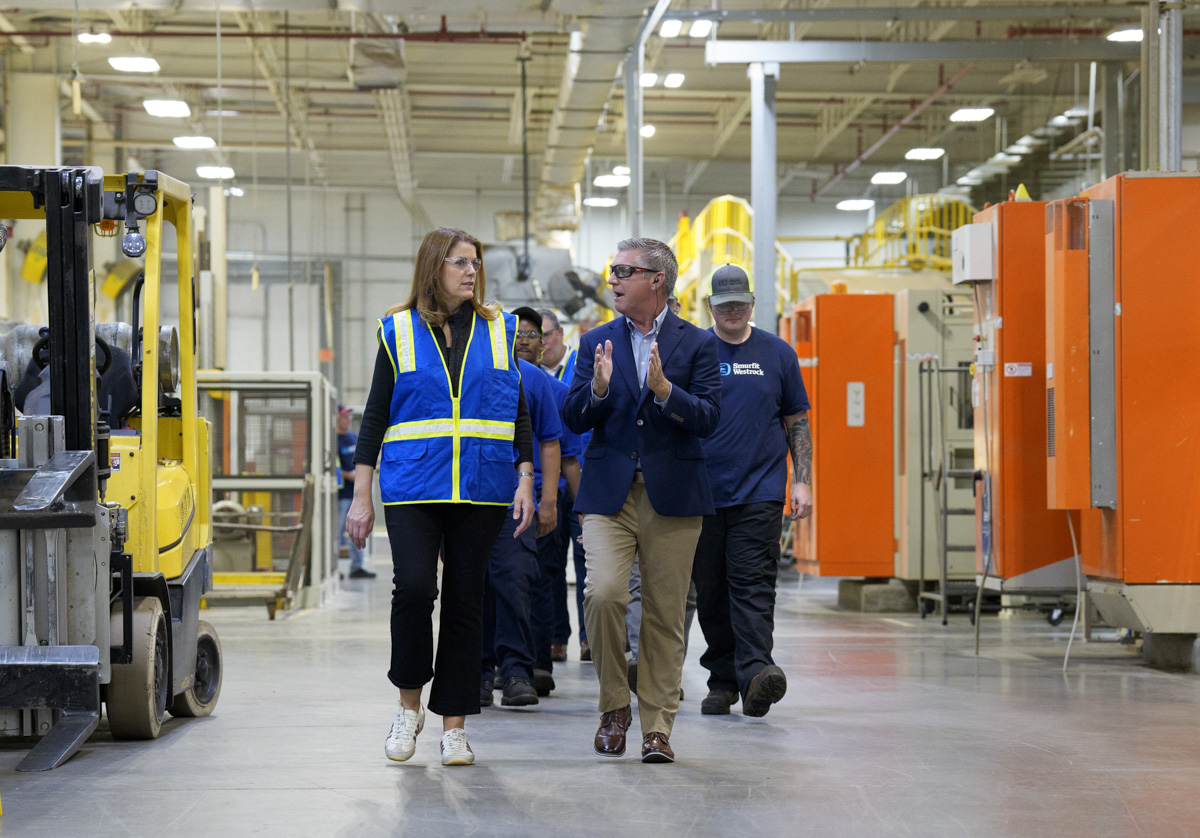
The tour: Attendees toured global packaging manufacturer Smurfit Westrock’s Winston-Salem facility, observing how students combine classroom instruction with paid, on-the-job experience at sponsoring local manufacturing plants.
The event also showcased FAME, the MI’s employer-led apprenticeship program that delivers real results for manufacturers and their future workers, which has an active chapter in the Triad region.
Attendees heard from Smurfit Westrock PM tech Charley Crowther, a 2026 graduate of FAME’s First in Flight chapter, alongside Smurfit Westrock Vice President of Operational Excellence Travis McDonough and Charles Little, general manager of the Smurfit Westrock plant in Winston-Salem.
AI: MI leaders also highlighted the rollout of the AI Skills for Manufacturing Training Suite, which offers free, practical courses designed to build AI skills among manufacturing workers. The North Carolina events are part of the MI’s multistate road show hitting key industrial hubs throughout October to showcase practical AI training and employer-led workforce models.
Smurfit Westrock says: “Students learn the most when they can put classroom concepts into practice on the manufacturing floor,” said McDonough. “FAME equips future manufacturing workers with the skills and experience they need to succeed from day one. These programs also help us build a strong local workforce that keeps our operations running safely and efficiently.”
The MI says: “To close the skills gap, manufacturers need to be proactive. Workforce needs to be a centerpiece of long-term business strategies,” said MI President Carolyn Lee. “North Carolina’s First in Flight FAME chapter proves that when you equip workers with hands-on technical skills and digital tools like AI, you can build a resilient, world-class workforce—and we’re seeing the dividends here at Smurfit Westrock.”
4. U.S., Argentina Announce Critical Minerals, Energy “Corridor”
The U.S. and Argentina have launched an economic initiative “to move critical minerals, energy and other resources” from Argentina to Western markets (CarbonCredits.com).
What’s going on: The Andes-Atlantic Corridor, announced by the State Department during United Nations General Assembly week in New York, “will connect Argentina’s mineral-rich northwest and the Vaca Muerta energy basin [in Patagonia] with Atlantic ports and Western markets.”
The Export-Import Bank and the Argentine government also signed the U.S.-Argentina Build the Future Framework, under which the bank will finance up to $7 billion in critical minerals and energy endeavors in Argentina.
Lithium and copper: Argentina is a major lithium producer and has large, untapped copper reserves.
The Trump administration has prioritized shoring up domestic and allied supplies of lithium, copper and other critical minerals.
Energy: In addition, the Andes-Atlantic Corridor is intended to improve the infrastructure between the Vaca Muerta shale formation and export markets.
“The U.S. and Argentina are also looking at pipelines, power infrastructure and ports as part of the wider strategy.”
The EXIM Bank signed a separate term sheet offering up to $6 billion in potential financing for an Argentine liquefied natural gas project.
As the NAM advised in its agenda, the U.S. must leverage collective advantages of international partners through plurilateral initiatives addressing the entire critical minerals life cycle, from R&D to recycling.
The last word: “The Andes-Atlantic Corridor, along with other related initiatives of the administration, has the potential to help diversify and strengthen the critical mineral supply chain through impactful investments in infrastructure and logistics, supporting U.S. manufacturing strength and competitiveness,” said NAM Director of International Policy Rachel Minogue.
5. NAM to EPA: Avoid Duplication, Unnecessary Risk in Asbestos Regulation
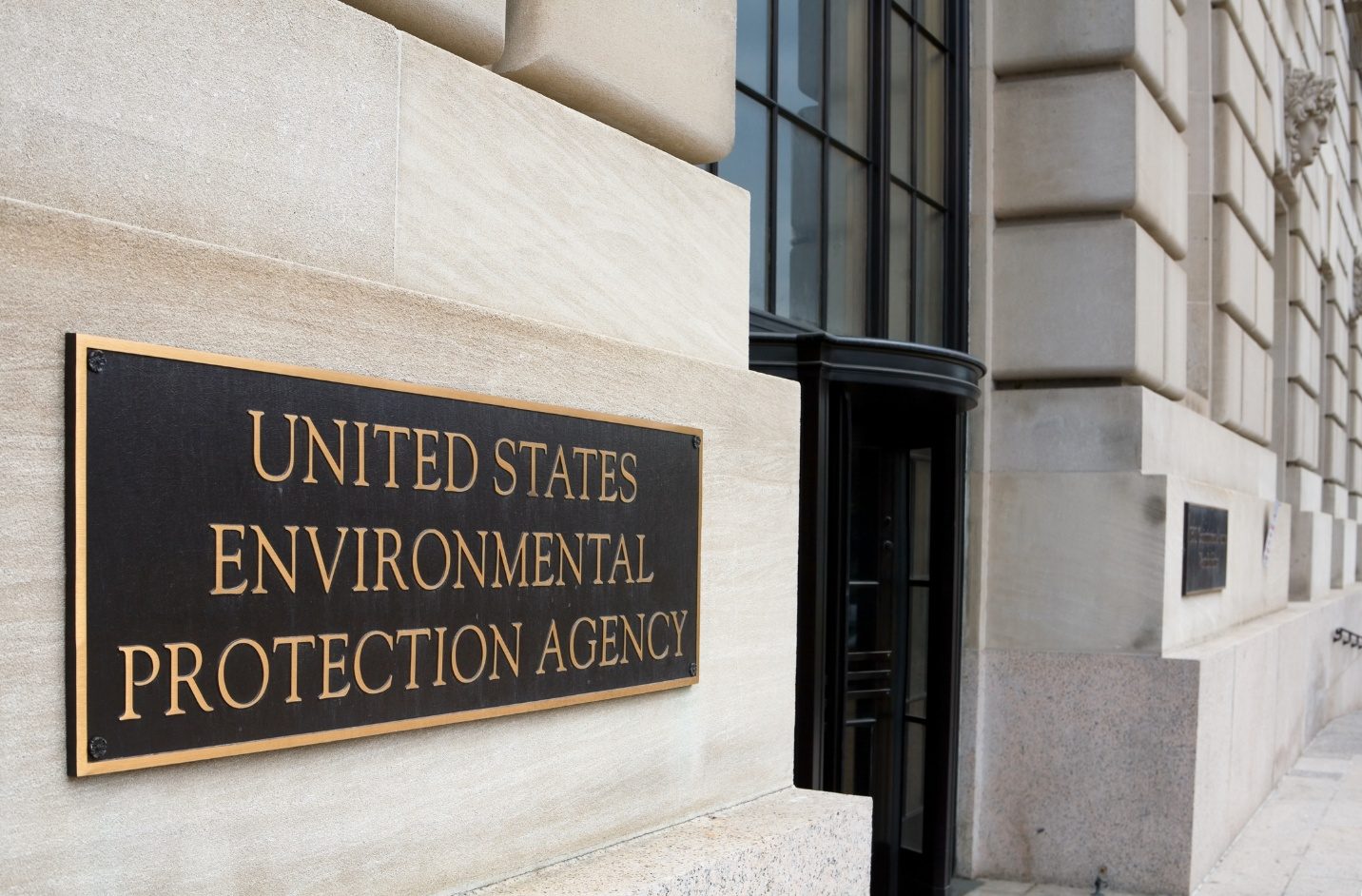
The Environmental Protection Agency should take a risk-based, targeted approach to the management of legacy asbestos under the Toxic Substances Control Act, avoiding duplicative regulation, the NAM told the agency recently.
What’s going on: “Congress designed TSCA to complement other federal authorities, filling remaining gaps in the protection of workers and the public without creating unnecessarily duplicative or inconsistent regulatory frameworks,” the NAM said in response to a request for information on the EPA’s forthcoming TSCA Asbestos Part 2 risk management rule.
“Workplace activities occurring at manufacturing facilities that disturb asbestos-containing material are already subject to an extensive federal regulatory framework,” including rules from the Occupational Safety and Health Administration, the EPA’s National Emission Standards for Hazardous Air Pollutants and other programs, the NAM continued.
Why it’s important: Existing asbestos frameworks and regulations “provide substantial protections for employees and other persons performing asbestos-related work at manufacturing facilities,” while additional overlapping requirements under the TSCA could create unnecessary duplication, inconsistency and compliance confusion, according to the NAM.
What should be done: The EPA should focus its efforts on activities that contribute to unreasonable risk and are not covered by existing oversight, the NAM urged, and only “‘to the extent necessary’ so that the substance no longer presents the unreasonable risk identified by the agency.”
The final say: “The NAM appreciates the EPA’s request for practical information before proposing an Asbestos Part 2 Rule,” said NAM Vice President of Domestic Policy Chris Phalen and NAM Director of Chemicals, Materials and Sustainability Policy Reagan Giesenschlag.
“In developing risk management actions, manufacturers urge the EPA to recognize the controls already required and used at covered workplaces.”
Industry News
The Data Centre Interview: Johnson Controls’ Katie McGinty explains how cooling, heat reuse and transparency can balance the local costs and benefits of data centres (Data Centre Magazine)
GSK pledges $800M to add biologics production capabilities in Pennsylvania (BioSpace)
Sanofi Is Using AI Agents To Cut Through Enterprise App-Hopping (Forbes, subscription)
NAM News
The White House cited data from the NAM’s tax flipbook in releases detailing the effects of the Working Families Tax Cuts in Texas and Alaska.