If you’re having trouble reading this, click here.
INPUT
October 30, 2026
1. Top Headlines
Elections: A Democratic House would scrutinize corporate leaders who donated to Trump (Axios).
Rates: Two Federal Reserve officials said that additional interest rate hikes will be needed soon (CNBC).
Europe: The European Central Bank left interest rates unchanged on Thursday (The Wall Street Journal, subscription).
2. Manufacturers Gather to Build a Resilient Workforce
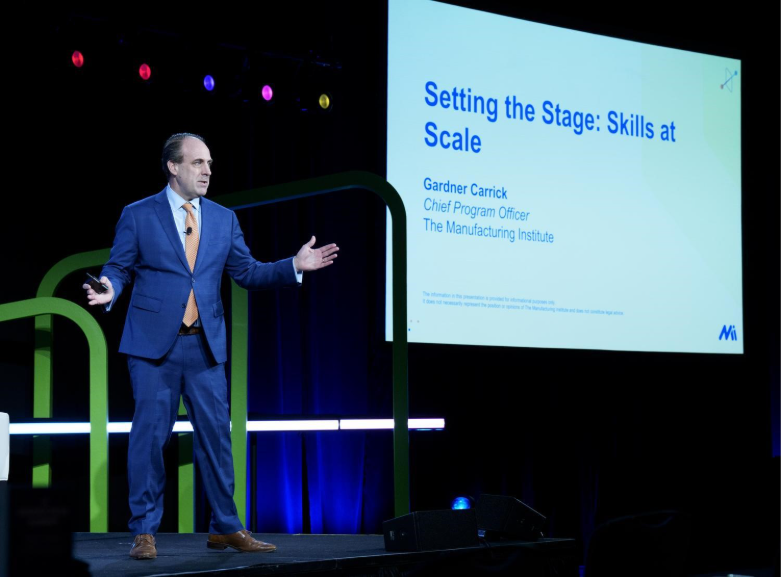
Nearly 300 manufacturers, educators and workforce partners from across the country convened in Indianapolis this week for the 2026 Workforce Summit, where they discussed practical solutions to manufacturing’s most pressing workforce challenges.
Hosted annually by the Manufacturing Institute—the NAM’s 501(c)(3) workforce development and education affiliate—the summit is the premier event for manufacturing leaders focused on building and strengthening a resilient workforce.
Skills at scale: HR and operations professionals from manufacturers of all sizes, along with community and training partners, attended this year’s event, titled “Skills at Scale: Delivering America’s Competitive Advantage.”
“This is our moment to make workforce the strategy,” said MI Chief Program Officer Gardner Carrick, setting the tone during the opening session.
Indiana has the second-highest concentration of manufacturing jobs per capita in the nation, making Indianapolis an ideal venue for these discussions.
The insights: In mainstage keynotes, breakout sessions and brewing solutions conversations, attendees traded practical insights and strategies.
Culture and retention: Eli Lilly spotlighted its work to support frontline workers’ success, using corporate communications, connection to the company’s purpose and accessible career development programs.
Veteran hiring: GE Aerospace discussed how its Lifting Futures initiative and partnership with the MI’s Heroes MAKE America are providing pathways for transitioning service members to pursue manufacturing careers.
Student engagement: 3M and GPS Education Partners talked about how they work with schools and colleges to build aligned, student-centered talent pathways.
Onboarding: Schweitzer Engineering Laboratories shared its pull-based onboarding approach, which improves safety education, reduces ramp-up time and strengthens early engagement.
Partnerships: The American Composites Manufacturers Association and Miles Fiberglass & Composites showcased their blended training model, which combines digital and in-person learning to improve onboarding and upskilling. Caterpillar Inc. discussed how it aligns strategic investments with local needs and workforce infrastructure.
AI training: MI staff spotlighted the MI’s new AI Skills for Manufacturing Training Suite, which brings AI skills to the current and future workforce. Rheem Manufacturing then showed how AI can capture a plant floor’s institutional knowledge, helping train the broader workforce. McKinsey & Company also offered a practical roadmap for building an AI-ready workforce at scale.
The final words: “The energy and conversations at this year’s event reflect what we see across our programs every day: the best solutions come from people doing the work,” said MI President Carolyn Lee, closing out the conference. “Manufacturers, educators and partners shared what’s working, and they’re returning to their companies ready to act. That’s why the MI brings these voices together.”
“A rising tide lifts all boats. We all have a part to play in this.”
Save the date: Next year’s summit will take place Oct. 25–27 in San Antonio, Texas. The MI will begin accepting proposals for breakout sessions in April 2027.
In the meantime, check out the MI’s Solution Series for year-round guidance. These monthly virtual events allow industry leaders to discuss workforce development approaches with their peers. Register for November’s Solution Series, “AI Skills for the Shop Floor,” today.
3. Coalition to Congress: Direct ENERGY STAR Funding to DOE
Congress should continue to fund the federal ENERGY STAR program for fiscal year 2027—and it should appropriate the money to the Department of Energy, the NAM and more than three dozen business groups urged congressional appropriators.
What’s going on: Earlier this year, Environmental Protection Agency Administrator Lee Zeldin announced plans to transition management of ENERGY STAR—a voluntary initiative created in 1992 that promotes energy efficiency in consumer products—from the EPA to the DOE, a move the NAM supported.
“Because DOE will hereafter assume primary responsibility for ENERGY STAR’s implementation under the [memorandum of agreement between the EPA and DOE], we request Congress to align federal funding with responsibilities as allocated by the agencies,” the coalition said.
The specifics: The coalition also requested that the Energy and Water Development appropriations bill include the same funding language the House approved earlier this year in its Interior and Environment appropriations bill, which says that “not less than $33,024,000” will go toward ENERGY STAR.
The final word: “The ENERGY STAR public–-private partnership drives the critical bipartisan objective of energy affordability,” the groups said, adding that the program has helped Americans save more than $500 billion in energy costs since it began.
“Lowering costs through efficiency also supports broader competitiveness goals including strengthening national defense and ensuring U.S. energy dominance,” they added.
Continued advocacy: The NAM has been a vocal advocate for continued ENERGY STAR funding and has rallied partner associations to defend the program, underscoring its importance in lowering energy costs, strengthening manufacturing competitiveness and advancing U.S. energy efficiency.
4. Siemens Energy’s Gas Turbine Business Is Booming
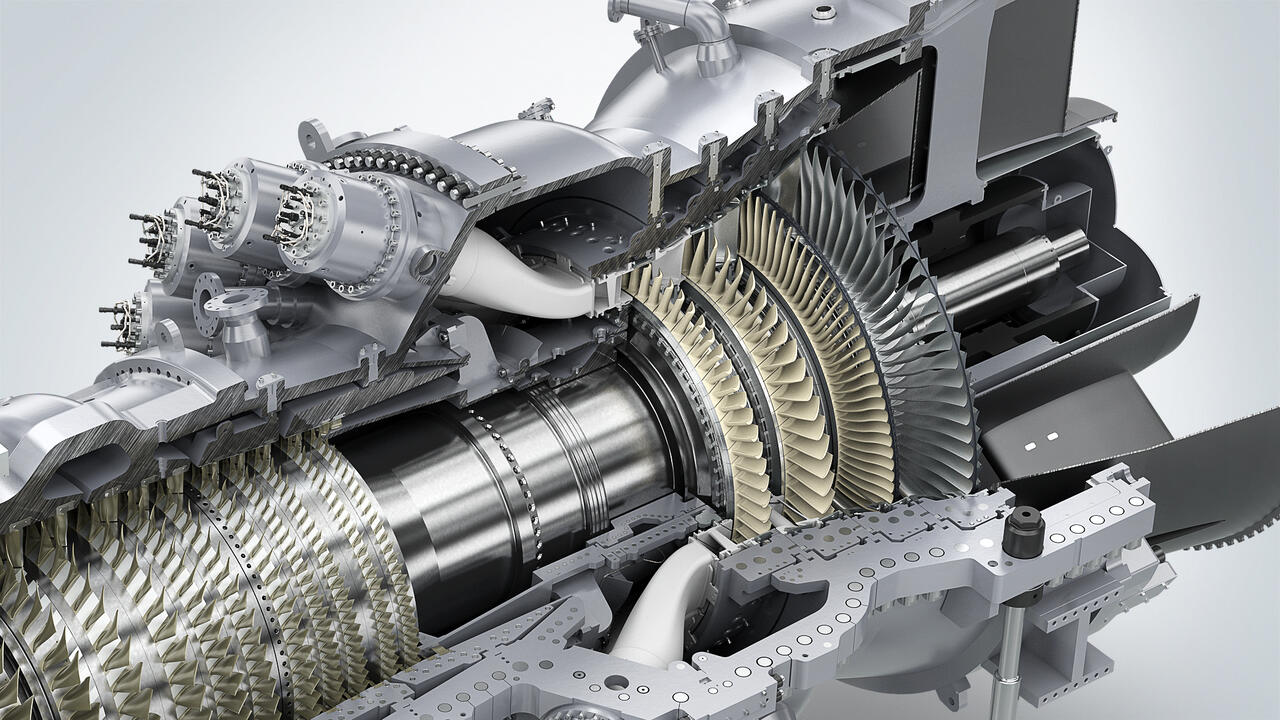
Siemens Energy’s gas turbine business is ramping up considerably, in large part due to demand from data centers (Data Center Dynamics).
Why it’s happening: Richard Reisig, managing director of investments and asset management at Siemens Energy, told DCD that “underinvested grid assets, industrialization and reshoring” are among the top factors behind the increasing demand for turbines.
“Data centers could account for about 12% of U.S. power demand, something we’ve never seen before in history, and it’s the biggest part of the growth.”
Why turbines? Siemens Energy is seeing its market expand around the world due to the advantages of turbines, Reisig said.
“Gas turbines can be deployed quickly and produce power in a number of different scenarios,” he said. “They give developers flexibility to deploy other technologies alongside them—they’re flexible, fast, predictable and financeable.”
The growth: “From 2025 through the first half of 2026, [Siemens Energy] booked 54.3 gigawatts of firm gas turbine orders,” (The Wall Street Journal, subscription).
The investments: In February, Siemens Energy announced a $1 billion expansion of its U.S. manufacturing base, focusing on the production of gas turbines and power grid equipment. It expects to create more than 1,500 high-skilled jobs.
“The investment brings us closer to our customers and helps us optimize supply chains,” Reisig told DCD. “It also gives us real-time feedback on our technology development. The closer we work with our customers, the better the outcome we’re looking for.”
Looking ahead: Demand for gas turbines far outstrips supply—and that imbalance could persist.
“It remains to be seen when supply will actually catch up,” Reisig said. “The question is whether timelines will get even longer as demand stretches further.”
Photo credit: Siemens Energy
5. Recycler Turns to Old Wind Turbines for Rare Earths
Recycling firm Paladin EnviroTech sees opportunity in America’s old wind turbines (The Wall Street Journal, subscription).
What’s going on: The U.S. is working to reduce its reliance on China for rare earths, which are critical to manufacturing everything from drones to MRI scanners. Paladin is betting that one potential source of new supply is the junkyard.
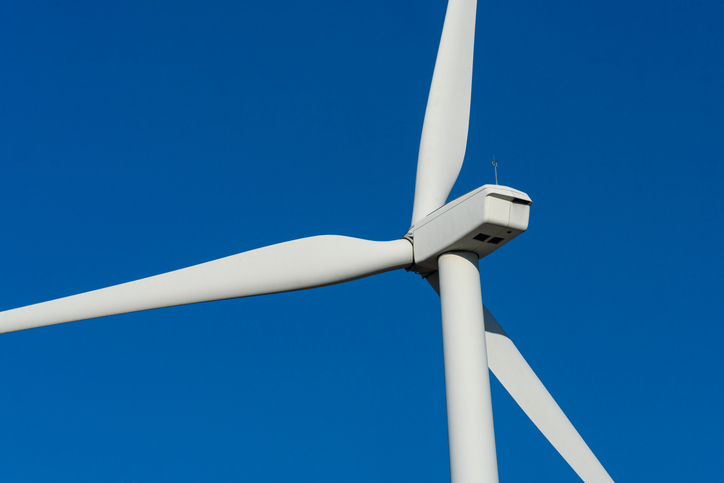
The Tampa, Florida–based company is targeting retired wind turbines, whose enormous generators can contain large rare earth magnets.
Some newer turbine models can hold up to a ton of rare earths, worth nearly $100,000.
Thousands of wind turbines across the U.S. are ready for retirement as the wind-energy sector ages.
The big picture: In a move “that laid bare Western manufacturers’ dependency on China,” Beijing, which controls most of the global rare earth supply, tightened export restrictions on the materials last year.
No easy feat: Getting rare earths out of the old turbines is difficult work.
“Cranes have to remove the blades and the nacelles—the room-size housings that contain the turbine generators. Then the components are sliced up with hydraulic shears and other equipment and loaded onto heavy-duty trucks.”
Meanwhile, the wind “can play havoc with blades being moved by cranes.”
Looking ahead: Paladin expects to secure enough retired turbines to run an efficient operation and forecasts that next year, wind-turbine magnets will make up about 40% of its total tonnage.
The firm currently has a pipeline of about 500 turbines nationwide.
Stratasys to Unveil New Manufacturing Equipment at Formnext 2026 (Advanced Manufacturing)
Caterpillar posts ‘highest sales quarter ever,’ fueled by data centers (Manufacturing Dive)
NAM News
The NAM’s upcoming permitting reform event with Sen. Sheldon Whitehouse (D-RI) at Cooley Group on Monday, Nov. 2, garnered coverage in Punchbowl Midday (subscription) and a post on X from Punchbowl Energy reporter Josh Siegel.